Observation and Identification
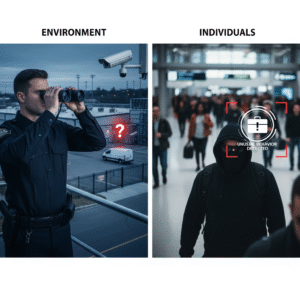
Effective observation is one of a security officer’s most crucial duties, requiring vigilance at all times. Officers must observe two main things in the work area: the Environment and Individuals.
Signs of disruptive or inappropriate behaviour may include:
- Loud yelling or verbal threats.
- Talking about violence.
- Invading the space of other people.
- Hostile body language, such as a red face, flared nostrils, and balled fists.

To identify a person demonstrating inappropriate behaviour, look for signs like:
- Surveillance.
- Acquiring supplies.
- Leaving behind packages, bags, or other items.
- Displaying strange mental or physical symptoms.
- Strange noises, including screaming, yelling, gunshots, or glass breaking.
Communication and Cultural Awareness
Security officers must exchange information using non-verbal and oral communication that accounts for social and cultural differences.
Social and cultural differences can be expressed in terms of:
- Age, ethnicity, and dress.
- Beliefs, values, or practices.
- Cognitive (intellectual) ability.
- Conventions of gender/sexuality.
- Cultural stereotypes.
- Food and language.
Overcoming Language Barriers
To overcome language barriers, security officers should:
- Use plain language.
- Find a reliable translation service.
- Enlist interpreters.
Requesting Behavior Change
Security officers must explain required behaviour and request modification in a manner that avoids an aggressive or hostile response.
Interpersonal skills are vital, as security officers must develop them and learn to create a friendly, polite environment. These abilities help consumers trust the officer, increase customer contentment, and enable the officer to recognise when something seems off.
Explaining Required Behavior
General guidance for security officers regarding required behaviour includes:
- Always stay vigilant and be in good working condition.
- Do not consume alcohol or use drugs while intoxicated.
- Do not treat people differently than other people.
- Never carry any item which can be threatening.
Guidelines for Requesting Modification
When requesting behaviour modification, guards must:
- Be brief.
- Be explicit.
- Be concise.
- Make sure everybody understands them.
Non-Verbal Cues that Increase Hostility
Be aware of non-verbal communication types that can increase fear, aggression, or hostility in others, such as:
- A person who clenches their fists or tightens and loosens their jaw.
- An abrupt shift in body language or tone during a conversation.
- The individual begins to pace or fidget.
- A shift in eye contact style.